
NRC RIC 2015 – Day one observations
On March 10, 2015, I attended my first ever Regulatory Information Conference (RIC), which is an annual event hosted by the Nuclear Regulatory Commission. I had heard from various associates that everyone who is anyone in the nuclear industry should plan to go to the RIC whenever possible.
They were right. First of all, the conference fee is just rightsized for an independent publisher – zero dollars. That also makes it just right for any member of the public who is interested in finding out more about nuclear energy regulation and makes it right for any organization that wants to send a large contingent to the meeting. Other ideal candidates for attendance include nuclear professionals who might be looking for their next employment opportunity.
Aside: I ran into several former colleagues from the mPower project who fit that last description. End Aside.
Over the years I’ve attended numerous conferences hosted by various groups within the nuclear community. The RIC was, by far, the most heavily attended of them all. There were close to 3,000 people there — perhaps because of that rightsized price — with the overwhelming majority of them being older white men in dark suits.
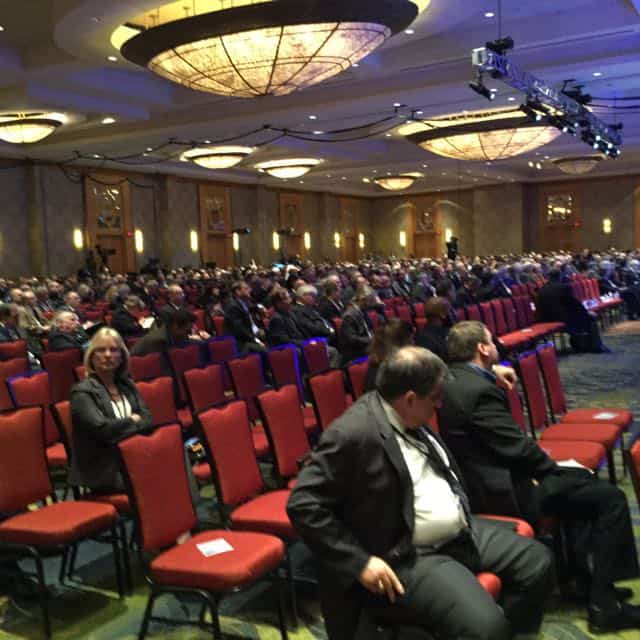
It says something slightly disturbing about an industry where the largest annual gathering is hosted by the regulatory body for the purpose of explaining its actions to the people that must abide by the directives, memos, guidance, and regulations. We need some innovative thinkers who can change that situation.
On the morning of day one, which was the only day my schedule would allow me to attend, Chairman Burns, Commissioners Ostendorff and Svinicki, and the Executive Director for Operations (EDO) Satorius each gave talks and addressed a few written questions from the audience. Those talks were captured with full video and are available on the NRC webcast archive site. (Look for videos with RIC 2015 in the title.)
Unfortunately, there was no opportunity for verbal questions from the floor. That’s usually one of my specialties at a nuclear conference. At most nuclear gatherings I attend, there are few people who can beat me in a dash to the microphone.
For a thoughtful, entertaining and personally revealing speech, it would be difficult to beat the talk that Commissioner Svinicki gave. Even with a pretty big audio issue through a part of her talk, she captivated the audience and provided a great deal of insight into the way that she approaches the task of serving as a regulator.
One of the specific topics that she addressed was timely and worth highlighting. A fairly constant refrain from certain politicians and antinuclear activists is that the nuclear industry has been slow to implement the recommendations made by the Fukushima Task Force that was hastily assembled by Chairman Jaczko and tasked with providing a reaction roadmap within the 90 days after the event.
Commissioner Svinicki explained how hundreds of members of the commission staff have taken that report as a reasonable first look at the event and added their own expertise and experience in formulating effective plans that meld with other industry actions without duplicating them or conflicting with them. Her words are better than my interpretation of them; please watch the short clip below.
A written question was submitted from the floor to Chairman Burns regarding the conduct of public meetings. Though I am not positive of the source of that question, I’m reasonably confident that it was at least partially stimulated by the intensive discussion in various nuclear blogs about the intimidating environment that was tolerated by the NRC at the Feb 19, 2015 meeting in Brattleboro, VT.
During his later talk, Mark Satorius, the Executive Director for Operations, added some additional information. Both the chairman and the EDO acknowledged the need to improve, but seemed a bit cautious about making any affirmative statement about maintaining good order. Satorious indicated that a study group within the agency was tasked last summer to review public meeting conduct. He said that the report from that effort would be sent to the Chairman within the next few weeks. I joined the questions and responses from the chairman and EDO together in the below clip.
Chairman Burns also addressed an important question that affects the US’s ability to be a leader in nuclear innovation. Here is a transcript of that question and response, followed by the excerpted video from the recorded talk.
William Dean: (Reading a question submitted by RIC 2015 audience) How can the commission deal expeditiously with entrepreneurial non-light water advanced reactors, likely without a traditional utility buyer?
Chairman Burns: I think the staff is in a position to speak with those who might be interested in it to understand what some of the issue are with respect to where the NRC has a role to play in terms of licensing; in terms of understanding what the acceptance criteria are.
But again, because we are a few-based agency, those who come in generally will have to be able to pay for the application; be willing to pay for the application review. There has been some work, I know, in the Department of Energy in terms of working with some of those who might be interested in the newer technologies. But development side, that’s where that’s going to have to be.
What we can do, as I alluded to in my speech, we are engaged in a project that looks at general design criteria for advanced reactor or non-light water reactor designs. And that’s the type of work we can do to assure that our processes are as transparent as they can be and that they are also — and again this is consistent with our principles of good regulation — that they’re repeatable. That they’re repeatable in terms of what the criteria are and what the necessary hurdles are to obtain acceptance or licensing in those circumstances.
What that interaction reveals is a functional system breakdown that can be described as a “chicken or egg” or “Catch-22” conundrum. The regulatory agency that has a monopoly right to grant permission to own and operate nuclear reactors in the United States has no existing criteria for reactors that are not based on light water technology.
Developers are free to approach the NRC and volunteer to pay $279 per hour to the government to have them listen and think about developing the necessary criteria. Assuming they complete that task, then the developers are free to develop an application for a technology that meets all of the criteria and then pay the NRC to review that application.
It might not be clear to people who have always worked for the government, but investors cannot make that kind of commitment to a project that has no way to control either cost or schedule. The complete lack of clarity and the idea of supporting government activity that has no time limit based on an hourly fee schedule prevents any interest in developing advanced reactors. Even Bill Gates, one of the richest men in the world, decided he could not afford to risk entry into that process.
I had the opportunity to participate in a press conference with Chairman Burns during the mid morning break. That gave me the chance to ask a follow-up question. In his answer, Chairman Burns agreed that a technology neutral set of criteria would be an ideal situation and that he would be working with his staff to consider how those may best be developed.
In hallway conversations during the rest of the afternoon, I was involved in several discussions on various ways to alter the situation. Some of the ideas included the formation of what would essentially be a standards group among nuclear technology innovators — to include both established entrepreneurial companies, dedicated academics with a focus on new technology development, and perhaps even some pre-formation stage entrepreneurial inventors — that could develop a proposed set of general design criteria for advanced reactors.
If that group put its collective mind to the task, and gave up any hidden agenda of skewing rules to favor something they have already developed, it is possible that they could present the NRC with a set of technology agnostic design criteria that could be reviewed, revised if necessary, and adopted.
I heard rumors that the Nuclear Energy Institute (NEI) has formed an advanced reactor study group that might be able to perform this function, but that might not the correct sponsorship group. The NEI already has a strong constituency that has shown that it has little interest in enabling new reactor technology to be efficiently developed and deployed.
It really is okay for people to recognize that there are many different interest groups within the nuclear umbrella; perhaps it is time to develop a few specialized voices that can represent the varying views of inventors, manufacturers, operators, and suppliers.
That particular topic was a big one at my end of the hotel bar after the day’s meetings had adjourned. Other participants in that conversation shall remain nameless at this time.


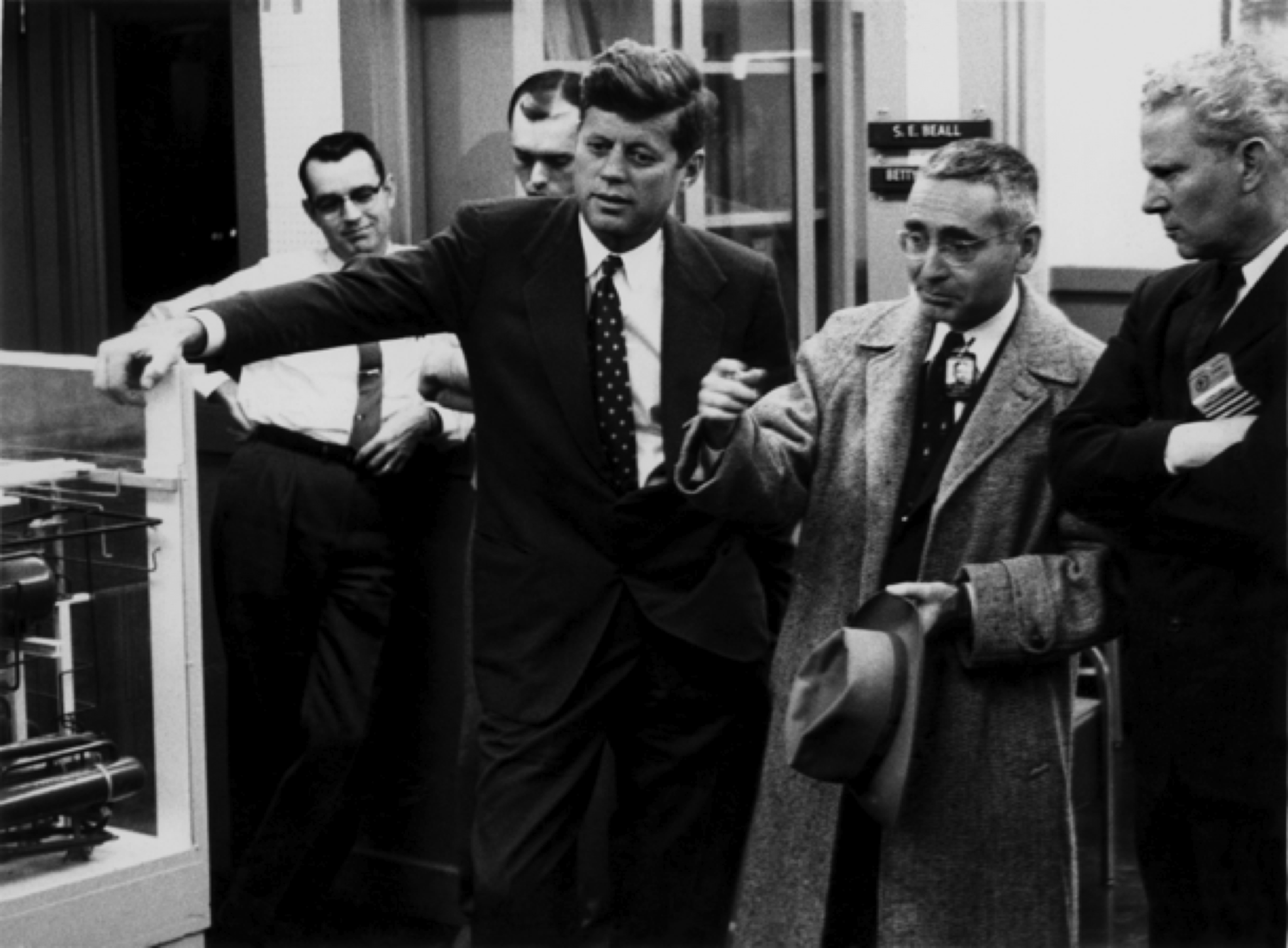
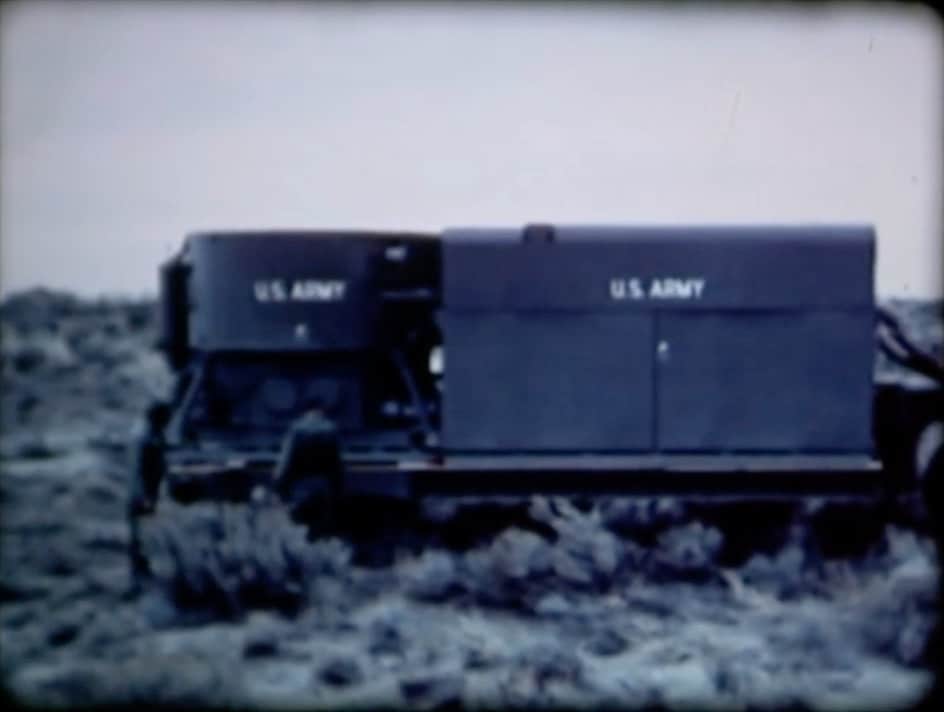
How much of the NRC’s portfolio of regulations deals with things outside the “nuclear island”, specifically the downstream steam systems?
From the PWR perspective: Well, the steam systems remove heat from the reactor so the NRC is concerned about that. What happens if not enough or too much heat is removed? Aside from the direct effects, the reactivity feedback from temperature changes affects the core. Also, there is potential for leakage from primary to secondary, so as a potential release pathway they are concerned. The steam systems are “high energy” systems and as such, ruptures in the piping could affect other equipment important to safety so they are interested in that. Similarly the turbines are high energy devices that can generate missiles that could damage important equipment.
Overall the regulator has a number of concerns with the steam systems. Check chapter 10 of NUREG-0800.
It should also be noted that many of these advanced reactors may have significant design differences, even outside of the nuclear island, which could run counter to the traditional thinking in several of these areas of concern.
Rod,
Good seeing you the other day at the RIC!
On the subject of developing advanced reactor design criteria, I’d say you hit the nail on the head. And I think you are right in stating that NEI might not be the correct sponsorship group. Luckily, I think the industry has recognized this, which is why I’d like to point out that DOE has led the effort and taken the first shot at developing a set of design criteria. In July 2013, DOE and NRC established a joint initiative to address this issue, and, at the end of last year, INL released a report called INL/EXT-14-31179, “Guidance for Developing Principal Design Criteria for Advanced (Non-Light Water) Reactors.” This report was developed “using technical and reactor technology stakeholder inputs coupled with analysis and evaluations provided by a team of knowledgeable DOE national laboratory personnel with input from individual industry licensing consultants.” Specifically, input was gathered from several groups, including:
– academics from ANS, KAERI, Argonne, INL, and ORNL
– large, well-established nuclear “legacy” companies like AREVA, GE, and Toshiba
– newer, entrepreneurial and/or “startup” companies like TerraPower, Gen4 Energy, and Hybrid Power Technologies
The report was then sent to the NRC and was discussed in a recent public meeting (held January 6th, 2015). Details on the public meeting and the report itself can be found . The meeting confirmed the desired outcome stated in the report: NRC-issued regulatory guidance related to the requirements of 10 CFR 50/52 pertaining to the development of advanced reactor design criteria.
I believe this is the “project” Chairman Burns was referencing in his speech.
As for the idea of generic advanced reactor design criteria, I think there needs to be a good deal of thought on how “generic” those criteria should be. This comment is long enough as is, so I’ll sign off now, but if you’re interested, I’d be happy to share my perspectives/opinions on that question.
Is not the fundamental problem with the NRC is that it is fee-based? Would not a more fundamental/structural fix to the NRC include receiving some part of the federal budget? The NRC would still have a portion of its budget that is fee-based, but the federal money could be specifically appropriated to new technology.
@Jim L
The real structural problem is that the NRC is some kind of weird hybrid of “fee-based” and government appropriations-based organization.
They bill “customers” on an hourly rate for “services rendered,” but that money flows into the great big Treasure revenue pot. The agency must then go through the annual budget preparation process which actually starts about two years before the Congressional budget is voted on for a given fiscal year. It is treated just like any other Executive Agency with prioritization as directed by the Office of Management and Budget.
There is no direct “demand signal” link between workload, income stream and manning. If a line suddenly appeared outside of the “ivory tower” on Rockville Pike, with credible checks in hand, it would take at least two years between the time that the NRC would start demanding payment and new hires would start filling vacant appropriated FTEs.
As the line builds, the agency might happen to be in a budget review process and be able to add a few extra FTEs in anticipation of there still being a demand once the additional people get approved, found and finally hired.
If the people in line get tired of waiting and take their checks home with them before they are served, the Treasury doesn’t get paid.
If anyone from the NRC would care to correct this description, please feel free. Unfortunately, I think I have it reasonably accurately and that many agency leaders are as frustrated by the situation as I am.
By the way, all you Ronald Reagan fans, the NRC was turned into a “fee-based” organization during the David Stockman/Ronald Reagan era when tax cutters decided that “user fees” were more digestible for the wealthy influencers than “taxes.”
Funny, I’ve never heard any NRC agency leaders publicly complain about this insanity. Of course, I’m not as immersed in the day to day activities of the NRC as you are, so I may not be looking in the right places. Or should I assume their continued employment in contingent upon their “silence” on the issue?
@Rod,
Any ideas on a more rational set up for the NRC? Is there another outfit that the NRC can mimic?? Maybe not the USPS, though….
Not every decision that Ronald Reagan made was necessarily good. He was after all an imperfect human being. But he did reverse the economic malaise (in part by reducing taxes) and the military weakness that Jimmy Carter caused, and compared to Carter he was pro-nuclear (truthfully, however, I think he was ambivalent).
Indeed, if we want an example of how a President can adversely impact the NRC, then we need to look no further than the current Administration’s appointment of Jackzo as the Chairman who had to resign because of his abusive and intolerant style of management.
The world today desperately needs a triumvirate like Ronald Reagan, Margaret Thatcher, and Pope Saint John Paul II.
“perhaps it is time to develop a few specialized voices that can represent the varying views of inventors, manufacturers, operators, and suppliers.”
The standards committees (ANS, IEEE, ASME, etc) used to be quite active in this realm. Nowadays it doesn’t seem that way. Should they be taking a more active role?