

ANS 2015 Plenary Talks – Part 2 Welcome from Doyle Beneby, Chairman and CEO of CPS Energy
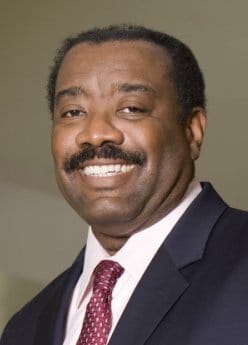
Doyle Beneby, the Chairman and CEO of CPS Energy, welcomed the ANS meeting attendees to San Antonio. He talk was partly the traditional greeting provided by the electric utility that supplies power in the service territory hosting the meeting, but he also spoke about his vision for the future of energy. He was not an official “plenary” speaker, but his welcoming talk fit well with the identified topic of the plenary.
Beneby joined the panel to answer questions after the rest of the talks were completed, so his words deserve to be shared along with those of the official speakers.
Beneby clearly expressed his confidence about the importance of nuclear energy in the U. S. energy portfolio. He also shared his skepticism about a low carbon future that does not include a strong component of nuclear energy. Beneby said that smaller reactors might be the right product for companies like his.
In some locales, like Texas, that’s not only a merchant market but also an energy only market small modular reactors might be the adopted technology because of the lower initial capital investment and the opportunity for investors to not have their funds tied up over a decade or so and risk political upheaval, cost overruns and the like. You’ve heard about all that before.
But clearly, in a significant way it [nuclear] will be a part of our dynamic going forward.

Podcast: Play in new window | Download (Duration: 8:28 — 7.8MB)
Subscribe: RSS

Re: “But clearly, in a significant way it [nuclear] will be a part of our dynamic going forward. ”
But will they walk the talk?
James Greenidge
Queens NY
James at a certain point in the not very distant future it will become clear that the consequences of our carbon habit are getting worse, and that renewables are not going to cut the carbpn mitigation mustard. At that point there will be no alternative but to tutn to nuclear power. When we reach that point, we will need low cost nuclear alternatives.
Obvious to whom? It was “obvious” before anyone started building so-called renewables and putting them on the grid, yet here we are hundreds of billions of dollars later.
I write until I’m metaphorically blue in the face in various forum comments about Germany’s and Denmark’s CIPKs and how high they are compared to France and Ontario, but the wind advocates don’t seem to understand.
Somewhere along the way, the wind (gas?) propaganda machine has decoupled renewables from CO2 reductions and convinced some portion of the public that the goal is to build more wind and solar generators, as if that were an end in itself.
I’m not sure that failure in reality will have any effect on public opinion, because the sources driving public opinion have never had any interest in the reality of CO2 emissions.
San Antonio owns a 40% share of STNP according to the (not very good) Wikipedia article on STNP. I couldn’t sort out from the article whether CPS was in or out as far as supporting the on/off expansion at STNP.
@Jeff Walther
You’re approaching the obvious conclusion that the powers that be are only concerned about carbon when attempting to market gas as a “low carbon” fuel to replace dirty — and cheaper, easier to stockpile, easier to transport — coal. They also like collecting massive subsidies for collecting small quantities of diffuse energy that vary with the weather.
There are, of course, many legitimately concerned scientists and others who want real, sustainable CO2 reductions and have figured out that nuclear fission is the logical, proven, multi-pronged way to achieve them. Many of these people have no focused political or economic power — yet.
Yep. I took your earlier article about the opponents of abundance to heart. So many things make little sense absent speculators and would-be speculators and suppliers who want constrained, expensive, and therefore volatile, which translates into profitable for commodity traders, markets.
For example, there’s no reason not to have abundant water supplies even in southern California. It just takes a willingness to build infrastructure. But, if instead, one can demonize the government, convince the people that everything should be privatized, then create commodity markets in what once was public utilities, then a fortune can be made on the backs of consumers desperate to keep themselves in the necessities of life.
And as a side benefit, the rich don’t get taxed to pay for the needed construction, and more money is available to be siphoned out of government into private interests instead of spent on useful things.
I fear this smaller, meaner, uncomfortable future that monied interests are pushing us towards and that delusional greens are cheering.
When did the public stop thinking that we need to modify our environment into something livable and comfortable? Every large construction was once hailed as a great achievement.
I hope it turns around and those legitimately concerned scientists develop some focused power.
I think I’ve written it before, but I appreciate this as a place with some (economically) rational explanation for the insanity I see around me. You may not have an immediate solution, but at least you make sense of things and with a little luck, your labors will bear long term fruit.
I can think of few things worse than lying to people about their choices. Folks don’t have time to be carefully informed about everything. When the anti-abundance crowd (or anyone) lies about public policy, they steal meaningful choice away from the people. It’s little short of enslavement. Does it really matter whether it’s ownership and the whip, or control of information and meaningful choices?